My new favourite witty cartoon du jour follows. Anyone know anything about who produced it and where it was originally published?
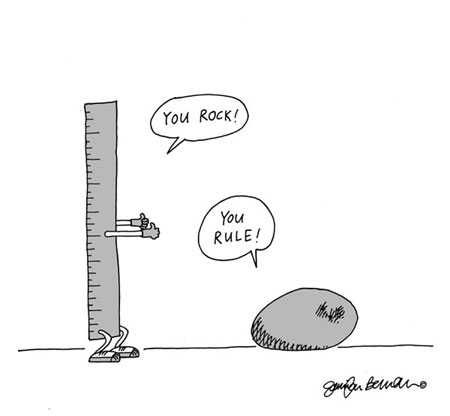
My new favourite witty cartoon du jour follows. Anyone know anything about who produced it and where it was originally published?
So here’s a thought partly inspired by an e-mail from a work colleague and partly by Haughey.com. Creating and editing wiki pages is extremely simple and elegant once you get past the first 30 minute learning curve. And essentially you end up with a page that’s got an incredibly simple template, pretty well marked-up code (or at least could do if you used the right Wiki system) and can be edited incredibly quickly. Now, imagine for a moment that the Wiki page itself is nothing but a content management interface and that the Wiki has a separate templating and publishing engine that grabs what you’ve written on the page, turns it into a nicely designed fully-functioning (uneditable) web-page and publishes it to the world. It could make the creation of small information rich sites enormously quick – particularly if you built in FTP stuff.
Now one of the problems with using Wikis generally is that they don’t lend themselves to the creation of clear sectionalised navigation. Nor do they do naturally find it easy to use graphic design, colour or layout differently on separate pages to communicate either your context or the your location in the site. That’s not to say that Wikis are broken, of course, just that the particularly networked rather than hierarchical model of navigation that they lend themselves towards isn’t suitable for all kinds of public-facing sites (the same could be said of the one-size-fits-all design of the pages). This would clearly be a problem. Wikis sacrifice that kind of functionality on the whole in order to gain advantages in other areas (ie. collaborative site generation and maintainance). Without those advantages, you’d simply be left with an inferior product.
So how to integrate design and architecture into the production of a wiki-CMSed website? Well, it’s not a particularly new question with regard to wikis generally – loads of suggestions about how some kinds of hierarchy could be built in have been made and some of them implemented. On the whole they’ve not been terribly successful as they present a higher level of user-level complexity, and with a lot of potential naive users, publically editable wikis can’t really afford complexity. But that’s not true if only one person or a small group were to be updating the site. The complexity level could increase a bit and the learing curve would have to be just a little steeper initially.
Here’s an example of how you could create hierarchy and utilise different templates at the level of the individual page. First, imagine a templating interface that allowed you to create an outline hierarchy of the various sections of a site (just like you’d produce in the outline view of Word or using something like OmniOutliner). Now, each section of that site-map could have a distinct template attached to it, or inherit a template from the section above. Then all you’d need on the Wiki-page (as content-management interface) would be a drop-down box on the right that allowed you to choose which section the page you’d created would sit under. Given that, you could use the mechanics behind the templating engine automatically generate a variety of different models of hierarchical navigation and breadcrumb trails which you could embed into your templates (you could use a templating mechanism very much like the one used to move content chunks around weblogs using Typepad). And the same part of the Wiki page that you use to decide which section the wiki page should be contained within could also house a .gif thumbnail of the template for that page. And the assigned section of a new page could even default to that of the page from which you created it – forward-link from a page about Troubleshooting (in the section “Help”) to create a page about Error Messages, and Error Messages is automatically created inside the “Help” section initially. And all of this could then be ‘published’, pushing everything out in a lovely stylish elegant and visually rich format to the rest of the world at the push of a button.
Wouldn’t that be cool? Blogger-style management for all kinds of other sites… The only things that don’t seem obvious to me at the moment is how you make the intra-wiki links not look like Wiki links to the general public while preserving the ease of use that they engender for the person creating the pages… Any thoughts?
Considering how annoying I find The Social Life of Information (again – more on that later), it’s surprising how often I feel that I should be posting some of the nuggets contained within it for a larger audience. Anyway, there’s a really interesting quote in the book from Paul Duguid’s trip report from Portugal which I think is pertinent to my other post (A fragment of a world full of metadata) on the vast amounts of metadata that the real world supplies us with around the edges of the ostensible ‘content’. But then again – as I say – I find much of the book so aggravating that I’m not sure quoting a chunk of it to support one of my positions is a particularly inspired idea.
I was working in an archive of a 250-year-old business, reading correspondence from about the time of the American Revolution. Incoming letters were stored in wooden boxes about the size of a standard Styrofoam picnic cooler, each containing a fair portion of dust as old as the letters. As opening a letter triggered a brief asthmatic attack, I wore a scarf tied over my nose and mouth. Despite my bandit’s attire, my nose ran, my eyes wept, and I coughed, wheezed and snorted. I longed for a digital system that would hold the information from the letters and leave paper and dust behind.
One afternoon, another historian came to work on a similar box. He read barely a word. Instead, he picked out bundles of letters and, in a move that sent my sinuses into shock, ran each letter beneath his nose and took a deep breath, at times almost inhaling the letter itself but always getting a good dose of dust. Sometimes, after a particularly profound sniff, he would open the letter, glance at it briefly, make a note and move on.
Choking behind my mask, I asked him what he was doing. He was, he told me, a medical historian. (A profession to avoid if you have asthma.) He was documenting outbreaks of cholera. When that disease occurred in a town in the eighteenth century, all letters from that town were disinfected with vinegar to prevent the disease from spreading. By sniffing for the faint traces of vinegar that survived 250 years and noting the date and source of the letters, he was able to chart the progress of the cholera outbreaks.
His research threw new light on the letters I was reading. Now cheery letters telling customers that all was well, business thriving, and the future rosy read a little differently if a whiff of vinegar came off the page. Then the correspondent’s cheeriness might be an act to prevent a collapse of businss confidence – unaware that he or she would be betrayed by a scent of vinagar. (Chapter 7 p.173)
A very recent picture of me trying to look serious. I shall shortly add this to my ongoing visual Brief History of Tom.

So the weblog competition that I don’t tend to get stroppy about is back and what a relief it is after all that Guardian rigmarole to have a nice award that’s nominated and voted for by members of the weblogging community itself and that vaguely reflects the culture and interests of that community. Yay! As we’d say over at Secret Santa, “Everyone gets a present! Everyone’s happy!” Because the Bloggies have returned!
There are some interesting shifts in the categories this year – Nikolai sent around an e-mail earlier in the year to see if he could improve them still further, and I’m delighted to say that this year there is no longer a combined “Europe and Africa” category, and that instead there are separate categories for Africa and the Middle East, The UK and Ireland and continental Europe.
In order to jog a few minds I’m going to make my usual yearly reminder of some particularly good sites that I’ve seen around the place which I think might deserve a mention. Feel free to ignore as you will, but these are likely to be on my initial ballot sheet.
If you’re looking for some good Aus/NZ blogs, then I can heartily recommend Loobylu, Brainsluice and Captainfez.com. For African/Middle-Eastern, I think I’m going to go with the obvious and cast my vote for Salam Pax, who has been the iconic weblogger of the year, at the heart of the largest news story of the year, and has been always honest, open and personal. For Best British/Irish, I can’t recommend CityofSound enough, and it’s not because Dan’s my employer or because we had a row and I feel guilty about it. Genuinely fascinating, well-written stuff. And for the European award, you wouldn’t go far wrong putting your pebble in the Tesugen urn when you’re voting.
In the topic-based categories, I’d like to recommend Coolfer, chachacha.co.uk and Share the Music – all of which I check up on regularly and find illuminating and passionate. The Best Political weblog will inevitably go to some foul warblogger, but I’d like to point you in the direction of the very British PolitX. In terms of the best gay weblog (always one of the hardest fought categories), I’m going to have to try and persuade you all to read trash addict more than you do. Otherwise, any of the classics would do nicely: Ernie, Bart or Sparky all come with the highest of recommendations. Best Group should (and probably will) go to Boing Boing and best community to either Slashdot, Kuro5hin or Metafilter.
As for myself – I pretty much think I’ve done my thing with regard to these awards enough times already. But that doesn’t mean that I’d be exactly upset if you decided to nominate plasticbag.org for Best British or Irish Weblog, or best GLBT weblog. One thing I would really like though (because I think it’s one of the best things I’ve written in a while) is for people to bear in mind (Weblogs and) The Mass Amateurisation of (Nearly) Everything when they’re looking to nominate for the Best Article or Essay about Weblogs category. Weirdly, it’s one of the things I’ve done this year that I’m genuinely proud of (despite all its clumsiness and deeply dodgy turns of phrase) and I’d genuinely like more responses to it.
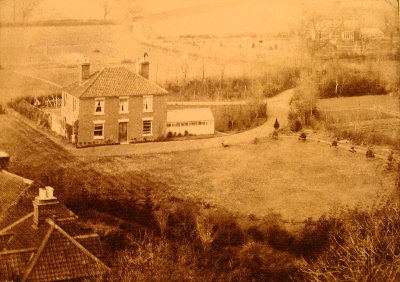
Here’s something quite special (for me at least). While I was up in Norfolk over Christmas, my mother showed me a picture that had been taken of our home shortly after it had been completed (circa 1900). It may sound ridiculous, but I find it extraordinary how immediately recognisable it remains despite all the additions and removals and reorganisations that it’s suffered/enjoyed over the last century. Particularly astonishing for me is that the little pine trees that you can see dotted around the lawn are still there today and are now about twice the height of the house itself. And those little trees you can see dotted around the gate and around the drive-way are now enormous mature horse chestnut trees with branches that hang low as you come into the garden and shelter that whole side of the garden in dabbled sunlight through the spring.
I love the idea that the house has gradually settled into its location over the years, that it has made its environment its home just as we made it ours. It doesn’t look like a block perched on a hill surrounded by fields any more. Now it looks like a part of the landscape. And that makes me think more about the nature of artisanship – particularly that the creators of the house and garden built something that wouldn’t even start to look its best until decades after they had died. I wonder whether the current vogue for disposable, short-term buildings means that we’re cheating ourselves of that settled-in, mature feel – as if all our buildings were like unripened flavourless cheeses that we never respected enough to come into their own.
I’d love to work on something that had that kind of presence in time, that wasn’t going to vanish or mutate overnight. I wonder whether that’s why so many web people still want things in print or physical media. Because that way the artefact can age and mellow with them – even after them. That they need that sense that they’ve created something living that will change and deepen through time just as steadily as it will endure.
Wow. What a long time it has been since I last posted to plasticbag.org. And what have I done in the meantime? I’ve been back to Norfolk to see my family, experienced the wonders of Christmas, seen Return of the King, watched ten hours of videos with my little brother, watched the snow come down and get washed away, struggled through lots of music television, had my first frank conversation with my little brother about being gay, opened and given lots of gifts, battled back to London via bus and train, gone back to work for a few days before late-night driving off to Cornwall for New Year with a selection of friends and friends of friends wherein was had much late-night drinking, (indoor) swimming, fondue-ing, walks in the wet and the dark, eating of beef and roaming around. Since I last posted I’ve travelled about eight hundred miles in total, including trips to Penzance for shopping, Newquay for boots and Bath for Sally Lunn’s. I’ve driven through Indian Queens, passed by Splatt and circumnavigated Pityme. I’ve also read a lot of The Social Life of Information (more on how much I want to burn that particular waste of headspace later), thought a lot about Tivo and Social Software, played a lot of Knights of the Old Republic and both been bought and bought for others some of the most wonderfully entertaining porcelain cups I’ve ever seen. All in all, an eventful and entertaining couple of weeks.
Next up is trying to get my head together to start a new project at work (interesting one this – should have really positive, interesting and coincidentally weblog-friendly effects on BBC Radio sites), trying to assemble my thoughts for a conference at Olympia in a couple of month’s time, trying to work out whether to propose a participant session for this year’s ETCon (which I’m still hoping I’m going to attend), while apparently also trying to score maximum points on self-created, self-destructive and highly non-fun-for-all-the-family games like, “How quickly and effectively can I alienate everyone I work with?”, “Be an arse!” and “How fat, weird and bearded can one man become?”. What did you guys get up to?
