Categories
History

Return to Broadcasting House…

So I don’t know where to start really so I’m just going to come out and say it. After several weeks of organisation, negotiation and discussion I find myself cheerfully back in gainful employment. My new job has almost intimidating potential and at the moment is a little large a concept to easily digest, but as of ten o’clock this morning I became once more an employee of the BBC – more specifically working in Radio & Music as part of a new live research and development team.

But it’s not just the job that’s fascinating – it’s also the environment. For the first time I’m actually going to be working in and around Broadcasting House, and (even though the whole area is being ripped asunder and rebuilt and even though I’m based in an extension to the main building) just being there feels like it connects me to a larger and messier tradition of people who have worked at the BBC in Broadcasting House over the last seventy years. From the origins of television through the Blitz right through until the present day, Broadcasting House has been a key element of the legacy of the BBC and there’s ludicrous amounts of history saturating every surface.

Last year I had a chance to visit the bomb shelters from the second world war – walls of concrete six/eight feet deep covered with faded remnants of sixty years of use and disuse. It was fascinating, atmospheric, almost haunting… The BBC Radio Theatre that was in the core of the oldest part of the building has been the scene for some of the countries greatest comedic performances – from the Goons and Round the Horne right through to (almost) the present day. When George Orwell was working for the BBC writing propoganda, he was based in Broadcasting House. There’s a Room 101 in the building, and it’s widely believed to have been the basis for the Room 101 in the novel 1984. Pretty much concurrently with his work, one of the so-called Cambridge Spies – the drunken, gay, apparently sybaritic Guy Burgess was also working in the building. That is, of course, when he wasn’t working for Russia…

Insane architecture and technology from inside the control room

But it’s not just what happened inside the building that makes it vibrate with such potent historical energies. Even the sculptures on the front of the building (which are unfortunately covered up at the moment by scaffolding and screening) are significant. They were designed by Eric Gill – most familiar to graphic designers and typographers today because of his creation of Gill Sans. I heard a rumour from a friend of a friend once that the male statue originally had prominent genitals that were removed by a censorious establishment. I don’t know if it’s true or not, but it would fit with Gill’s aesthetic and with what I know about the political life of the nineteen-thirties.

There’s so much more that the building has been a silent witness to over the years. It’s coped with direct-hits from Nazi bombs, coped with generations of creative revolutionaries over eight decades and now is coping with a radical rebuilding to make it a home for the BBC for decades to come. It’s going to sound cheesy, but it’s a genuine honour to work there.

Categories
Random

Oskar & Apple…

When we went to Apple in Cupertino I got little Oskar a present that I thought he could grow into in a few months. And now he’s wearing it! Aw!

oskar_n.jpg

Categories
Random

From "Down and Out in the Magic Kingdom"…

Lili was flustered. “But if you can do a complete revision in eight weeks, why not just finish it, then plan another revision, do that one in eight weeks, and so on? Why take five years before anyone can ride the thing?”

Why indeed?

Categories
Random

Recent Highlights on Barbelith…

The perpetually unfinished experimental message-board that Cal and I made is coming up with some particularly interesting debates at the moment. Here are a few of my favourite ongoing discussions:

  • No Such Thing As Talent
    “So for my degree I had to study ‘Art, Creativity and Excellence’ from a cognitive psychology perspective. After a few months of scepticism I reluctantly admitted my professor was right and that there is no such thing as talent- skills are acquired only through practice.”
  • Wealth, Power and Race – is it just that the white guys want some things more?
    “Unless of course the levels of greed and family-destroying workaholism that lead to such high positions are, culturally speaking, predominantly a white male thing…..?”
  • Is there any utility derived from anti-globalisation, anti-capitalist, anti-g8 rallies and demonstrations?
    “Speaking of violent anarchist action specifically, does this counterproductively alienate the common person from their cause, rather than promote it?”
  • Gay Pop Music
    “Apparently, it’s Gay and Lesbian Awareness Month, at least on the public radio, and so they did this profile thing with three pop albums that document the history of gay civil rights.”
  • Girls Rule, Boys Drool: The New Gender Gap
    “I am not sure if the switchboard is the right place for this, but let’s start here and move the topic if necessary. According to this article in Business Week, girls are snapping up all the top spots in schools, while boys lag behind. And it’s a major cause of worry for the future.”
Categories
Random

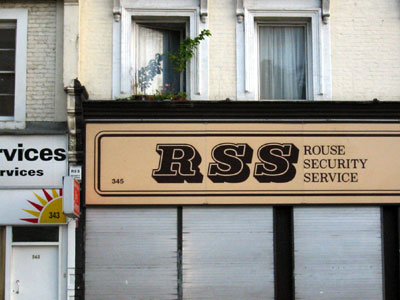
RSS: The Truth…

harrow_road.jpg

Finally we know what it stands for…

Categories
Hacks Navigation

Against Search Engine Optimisers…

In the middle of the comments for a fairly interesting article about the Googledance that never ends there’s a post from a professional search engine optimiser. He says:

My consulting business website ranks highly in google for a number of search terms that are pertinent to my business. I didn’t get that way using a search engine optimization service. It didn’t cost anything but my time and the sweat of my brow. And it’s really very simple how it works. I tell all my methods in How to Promote Your Business on the Internet.

In summary:

  • Put content on your site that visitors will want to read – and return to. Not just material aimed at potential customers, but stuff anyone will want to read.
  • Post new content regularly
  • Ask for links, and offer reciprocal links

That’s the method I used to make a Google search for software consultant turn up my resume as the #4 search result.

I want to make something clear. This is probably one of the best statements about search engine optimisation I’ve ever read, and it’s still horse-shit. The thing that it says that’s actually useful is that you should have a good site. First and foremost – put content on your site that people want to read and update it regularly. That’s a really really good point and something that people should remember. But it’s not something that a search engine optimiser can help you with, so that leaves you with link-exchange. Which is horse-shit. I’m going to say that again because I enjoyed it so much. It’s horse-shit.

Ladies and Gentlemen, listen very carefully when I say this: There is absolutely positively never any reason whatsoever to go to a search engine optimiser and they may damage your business as much as they help it. The reason they may damage your business is because – for the most part – they are designed to hack the system – to find short-cuts and tricks that fool a search engine into believing your site is something it isn’t. And search engines change their indexing methods all the time to compensate for these tricks. All the time. Google do it monthly! And if they find someone using them – often they’ll penalise the sites concerned.

Here – then – is the big secret of search optimisation. Search optimisation isn’t really about optimising for a search engine at all. It’s about making good quality, cleanly designed, semantically-constructed sites that people want to read, that people can link to and which people can get the gist of in a few seconds. If you make a website well for human beings, then as a side effect – more often than not – search engines will spider it well and rank it highly. And they’ll do this because it’s the best site, not because you’re trying to fool them.

For the most part this is all you need to know:

  1. Highly complex and flashy animation does not help you, it hinders you – your site needs to be easily spiderable and that means that tricky navigational elements probably won’t help. If you have to use them (like I do for my archives above), present alternative simple ways to get around your site as well that use basic boring run-of-the-mill links. This is not a search optimisation tip – this is good navigation design.
  2. Meta-tagging is not that useful any more. But if you’re going to use it, do it properly. Specifically, if you’re going to put in description and keyword metatags – keep them short (twenty words most), accurate (actually reflecting the content in the body of your page), and don’t put the same metatags on every single damn page of your site! That’s not going to help at all! None of this will affect Google, who don’t pay any attention to meta tags and make up 50% of the searches performed on the web at the moment.
  3. Make it easy to link to things! This means, don’t use frames! This means, try and put discreet chunks of content on clear separate pages. This again is not optimising for a search engine at all – it’s how to build an information-delivery site properly.
  4. Use <title> tags properly! They sit at the top of every one of your pages and they’re designed to make it easy to spot things when you bookmark them. So tell people the title of the page you’re on – and do it honestly! Keep them short and clear, don’t use marketing speech at all, don’t try really really hard to find the right keywords, just use the title that explains what’s on the page best. To help people who bookmark you then you should probably put the name of your site at the beginning or end of the title, and if you’ve got a shallow site hierarchy, you can even put the path to the current page in the title as well. These things are helpful to people! Unsurprisingly, search engines try to use the same criteria as actual people do.
  5. Use semantic content whenever possible. This means when something is the title of a page or a section, stick it in a <h1> tag and use CSS to style it appropriately (and before you say anything, I’m aware that I don’t do that – but there’s a really good reason for that). Also when you’re linking to things don’t use terrible words inside the links like “click here” but actually use read words. This is good for people and helpful for search engines. Don’t lie! People would find it more useful if you linked to a page about sportscar GT with a link that said “We have a comprehensive section about sportscar GT“. Search engines – weirdly – do too!
  6. Bugger link-exchange! Google specifically penalises people for using known link-exchange programmes because they’ve been designed specifically to circumvent Google’s attempt to find quality sites that are well-respected and rated. Don’t try and fool the search engines unless you’re prepared to pay for search engine optimisers to come in and fix your site every two weeks.

God there’s loads more stuff I could say, but the rule of thumb is the same for all of them. Build sites that are easy for people to use, try not to let the technology get in the way of delivering the information and aspire to making things that work the way the web works, and you’ll never have any trouble with search engines.

Addendum: There’s an interesting article on Google over at Salon today in which – yet again – some of the people who try to mischaracterise the usefulness of their own sites by gaming search engine algorithms claim that not being allowed to lie about their site’s relevancy is terribly terribly bad. I have absolutely no respect for these people at all…

Categories
Personal Publishing

My obligation to you…

I feel a personal obligation to the people who read this site and to the world at large not to lie in my posts. I feel a personal obligation not to mischaracterise the truth and to correct any mistakes I make. I feel a personal obligation not to lie by omission. I consider it part of every human being’s duty to stand up and fight for what they believe in whenever the feel capable of doing so in whatever way they feel they can. I feel an obligation to foreground any conflicts of interest I might have.

I feel a very different kind of obligation to the friends that I’ve made online and the community that has grown up around this site, and to the communities that have formed between all of our sites. I have no desire to anger anyone, frustrate anyone or humiliate anyone. I believe very strongly in the power of reasonable debate, trying – whenever possible – to avoid blatant rhetoric and appeals to emotion, territorialism and nationalism in favour of serious attempts to find some kind of reasonable, workable solution or truth.

Much like Mark Pilgrim, I feel absolutely no obligation whatsoever to write to entertain the people who read this site. This is my space to be able to speak my mind or make whatever contribution to the world that I want to make. I feel absolutely no obligation whatsoever to change what I’m interested in writing in to fit the desires or needs of people who read this site. Nor do I feel any obligation whatsoever to avoid talking about things that they are not interested in reading or comfortable reading.

I believe very strongly that my site is a representation of myself in cyberspace – and I think that’s true for a lot of people who run personal sites wth weblog software. It is not a publishing venture. I have no potential revenues. I have no obligation or desire to maximise traffic for myself simply in order to get money. And for that reason I don’t feel an obligation to target demographics precisely or maintain any form of continuity on my site other than to say, “I wrote this. The thread through all this stuff is that it matters to me“.

If I was to self-censor and self-adapt purely in order to write for our audience’s desires alone (however big, however small), then the thin cord that separates our online selves from our offline selves would be severed. Our sites would become little more than costumes we wore – and I think that would be a betrayal of ourselves and the dozens of overlapping communities that each of us belongs to.

So on the days when I write things that you enjoy – relish it! Get pleasure from it! Sometimes people out there even get commercial benefits from stuff that I write – and that’s fine! Enjoy it – I want you to! And on the days when I say something that angers and infuriates you, tell me! Write to me and correct me or explain to me why I’m wrong. I want to know. I want to learn. And if it turns out that what I want to write about doesn’t interest you, then that’s fine – go elsewhere – there’s a world of sites out there to read. And you never know – I might even register your absence and try and mend my ways…

But I swear to god, the next person who tries to tell me what I should and shouldn’t be writing on my own site – which I produce for free and for which I ask nothing in exchange – is going to get a kick up the arse so fucking hard that when they finally land again they’ll have frost in their hair…

Categories
Hacks Personal Publishing

Hacks: "On this day" links in Movable Type

Each day webloggers across the world post news, comments and little fragments of personal information onto their sites. And everything that they post will be forever associated with that specific day in history. But they’re not the only sites to connect a piece of writing or a picture with a day. In fact all over the internet there are hundreds of ‘[something] of the day’ or ‘on this day’ sites – from “Astronomical Picture of the Day” through to “Dilbert Cartoon of the Day”. There’s a whole category on Yahoo dedicated to these things.

This hack allows you to put an automated link on the bottom of each of your posts to the Dilbert cartoon (or astronomical picture, word of the day etc.) that was published on that day. You can use it to add a little context to the events on your site or just to show off your interests.

First things first – what are we trying to link to? These sites often have simple URLs that are based upon the date on which they were initially displayed. For example the “Astronomy Picture of the Day” for February 23rd 2003 has the URL:

antwrp.gsfc.nasa.gov/apod/ap030209.html

…where the six numbers near the end are the year (03), the month (02) and the day (09). The Dilbert cartoon for the same day has this URL:

dilbert.com/comics/dilbert/archive/dilbert-20030209.html

…which uses almost exactly the same format except with a the year spelled out in full (2003).

So in order to insert these links on a day-by-day basis, we’re going to have to put the basic URL in place without the date elements, find some way of inserting those date elements and make sure that they’re formatted so they’ll work as a link. We’re going to do this by using some of Moveable Type’s most useful and versatile features – the <$MTEntryDate$> tag. If you insert this tag into your templates by itself it will use its default setting – which is designed for reading and will look a bit like this: “September 9, 2003 11:44 PM”. But you can easily override this by using the format attribute and one or more date-tag variables. Here are a couple of examples of how you might format <$MTEntryDate$> and what the result would look like on your published page:

<$MTEntryDate format="%d %b %y"$>
would look like "09 Sep 03"
<$MTEntryDate format="%Y: %B, %e"$>
would look like "2003: September, 9"

Here are what some of those letters mean:

Month:
%b - name abbreviated to three characters
eg. Sep
%B - name in full
eg. September
%m - presented as two digits padded with a 0 if necessary
eg. 09
Day:
%d - two digits padded with a 0 if necessary
eg. 09
%e - two digits padded with a space if necessary
eg. 9
Year:
%y - two digits padded with a 0 if necessary
eg. 01
%Y - four digits.
eg. 2001

So to make those daily URLs all we have to do is change the original URLs to include the <$MTEntryDate$> tag like so:

From:
http://antwrp.gsfc.nasa.gov/apod/ap030209.html
to:
http://antwrp.gsfc.nasa.gov/apod/ap<$MTEntryDate
format="%y%m%d"$>.html
From:
http://www.dilbert.com/comics/dilbert/archive/dilbert-
20030209.html
to:
http://www.dilbert.com/comics/dilbert/archive/dilbert-
<$MTEntryDate format="%Y%m%d"$>.html

So this is what you’d put into your template:

<a href="http://antwrp.gsfc.nasa.gov/apod/ap
<$MTEntryDate format="%y%m%d"$>.html">
Astronomical Picture of the Day</a>

This hack was originally supposed to appear in the ill-fated O’Reilly “Blogging Hacks” book. I’ll be putting all my contributions online over the next few days / weeks.

Categories
Random

On "Harry Potter and the Order of the Phoenix"…

So because my brain refuses to do what it’s supposed to be doing and is finding any and all other avenues to explore, I’ve read the entire seven hundred and fifty page Harry Potter novel over the last couple of days as well as produced an interminable amount of notes and scribblings of various kinds. My verdict on the book? Gripping and entertaining but also a bit meandering and lacking a clear escalation of pace / convincingly epic conclusion at the end of it. Seemed more of an accidental ending in some ways. Doesn’t compete with books three or four. But I look forward to the final two…

Categories
Hacks Personal Publishing

Hacks: Upgrading to Movable Type from Blogger

The instruction manual for Movable Type contains detailed instructions about transferring your weblog from Blogger and Blogger Pro, and these instructions work extremely well if you have not been maintaining your site for very long. But while it’s rare for there to be a problem with the importing process, exporting weblogs from Blogger isn’t always so easy.

The normal transferral process is essentially three stages:

  1. Replacing your Blogger template with one that formats your data in a way that Movable Type will understand.
  2. Changing your Blogger settings to produce one very large file containing all your data.
  3. Inserting that file into Movable Type’s import directory and pressing the import button.

Stage one is the simplest stage and presents no problems. You simply copy this text into your Blogger template page:

<Blogger>
<$BlogItemBody$>