This is probably well known by now, but according to a friend of mine who is still trying to work out whether to get the 12″ or 15″ Apple Powerbook, he’s been advised by a man he talked to at a London Apple Centre that a 15″ variety will take longer to be delivered because Apple have accepted there’s a problem with the screen getting brighter spots on it. Apparently they’ve definitely ceased production while they look into it. This is probably extremely good news for those of us who have a Powerbook with this problem, and it might explain why I have still not received my return voucher, over a week and a half after I rang them up. I’ll be checking up on this later, but I thought I should probably share the news. If anyone has more information on the subject, please feel free to add links in the comments.
Year: 2003
On pets…
So Queer Eye for the Straight Guy was apparently – woo – a tremendous success in the States and everyone was so happy about it and stuff because – ha ha – funny gay men patronising the dumbass straight men – how funny is that!? But now – if the reports are to be believed – then there’s going to be a “Straight Eye for the Queer Guy” show coming out, designed to turn the tables back again with – ha ha – hilarious consequences. But some of my gay colleagues are protesting that turning the tables back again isn’t really acceptable behaviour… Their argument is that gay people already know enough about straight life – given that they’ve had to spend many years trying to fit into straight culture (while being taught that their lives will be immoral, diseased and short-lived) before erupting free from this stigma in a blaze of brightly-coloured taffeta and nicely-tapered trouser-bottoms. Their point is – I suppose – that one’s a tasteless misrepresentation, and the other isn’t.
I’m just having trouble figuring out which is which! Because as far as I can see, both of them share one thing in common – a flagrant and blatantly patronising image of gay people as cheery little inoffensive sexless chappies. Well bollocks to that. Bollocks to happy gay people on TV, bollocks to the straight audiences, bollocks to the producers, bollocks to the bloody cameramen, bollocks to any passing trannies. Bollocks, if you will, to absolutely bloody everyone. I’m going to say this once and once only – and I hope it doesn’t come as too much of a shock to anyone: It’s not just Straight Eye for the Queer guy that will be patronising shit that sells an image of gayness that is damaging and frustratingly bland. Queer Eye for the Straight Guy was patronising shit as well.
I can’t really believe that was a shock to anyone, but just in case – I’m sorry for those of you who fell over and hit your head…
I suppose back in the late eighties, when the prevailing mood was that gay people were diseased perverts that would lead short, shameful and disgusting lives, the idea that we might get portrayed as happy little child-puppets might have been quite appealing. But that time has passed and I think we’ve all had enough now of that newest of grotesque gay stereotypes archetypes – that of the girl’s-best-friend, sexless, happy, home-keeping, stylish queer. I might actually bloody vomit if I see it one more time on television and if I get my greasy hands on Kevin Kline let me reassure you that I’ll be giving him a piece of my oh-so-wise, well-tailored and witty gay mind.
It’s not because it’s an unpleasant image of homosexual individuals, and it’s not because there aren’t any gay men that are all smiley and pastel in the world (because there are, and they’re lovely). It’s just because I’m sick to death with being “understood” by people I meet as being a “good-natured, slightly-dim, fashion-obssessed hysterical best-friend-in-times-of-need” kind of guy on the basis of the representation of ‘my kind’ in a few shit films and TV shows. There are differences between gay people and straight people – don’t get me wrong. But there aren’t any scientists world-wide who truly understand what the hell they are, and this leads me to suspect that maybe it would be foolish to think that a twenty minute comedy show would have a better idea.
Now I’ve read my Foucault like the best of them, and I believe him to be right when he says that categorising something is a way of asserting power over it. Hence the creation (and medicalisation) of homosexuality a little over a hundred years ago. And I’m with him on the next step too – that the creation of the category also creates an identity around which the group can rebel, to try and recast itself. But it works the other way around too. We started off as godless, sex-obsessed, dirty monsters and we fought and we’ve rebelled. And now instead we’re god-loving, relationship-focused, kitchen-cleaning princes among men who like little dogs, Versace and television where ‘we’ get to patronise people. Our ‘positive’ image has already been reincorporated and recontextualised and reconsidered and represented. The tremendous variety of gay male experience – from the most delicate to the most brutal, from the most elegant to the most fierce, from the most diplomatic to the most battle-ready, even from the most tacky to the most trivially crass – all of it is reduced down to the image of gay men as fussy little children – who play at ‘houses’, play at ‘cooking’, play at ‘being men’, play at life.
Well I want out. And this is where I turn around to face my comrades who loved “Queer Eye” but are cross about its sequel. I say to you that it’s not enough that a programme on television should just be ostensibly ‘nice’ about gay people. It’s shouldn’t float our boats that some show finds it entertaining to see the happy poofs take the piss out of groups that used to kick our heads in either. If you want some honour in your programming, demand that it shows you a larger variety of truths. Most particularly, demand that it shows you the truth of identity as something negotiated, fought for, forged, lost and potentially rebuilt. Don’t let them tell you it’s something that you’re born with, something inevitable that you’ll grow into whatever aspirations you might have. Because identity is a negotiation between the world around you and what nature gave you, mediated by your mind, morals, attitudes and beliefs. It can’t be given to you like you’d give a pet a name…
The Baghdad Blogger on Newsnight…
Watching the Baghdad Blogger on Newsnight this evening has been a vaguely dispiriting experience. It’s not entirely clear what his remit was or what the circumstances of the film were, but it looks like he was given a camera and very little support and left to try and drag a film together. The idiom was very webloggery – insight into the individual’s life and background blurring into commentary on life in Iraq. As an approach I think it’s very powerful – the most startling moment for me was his mother talking about watching Pop Idol and realising (yet again) how similar and connected we all are – but the implementation was terrible and – I fear – a bit embarrassing. The whole thing felt – yet again – like one of those blurred confusions between webloggery and journalism that journalists keep making that always seems to come out slightly badly for the bloggers concerned. Or maybe I’m being a little unfair…
Some of the things I’m thinking about at the moment – at work and not at work – that I’m having real trouble articulating for some reason but that maybe I can do something with if I set some of them free:
- Collaborative online experiences for friends, small groups, one-on-one interactions – going places to do things with friends, co-browsing, co-experiencing, what it’s like being at the cinema with a friend, backgrounded/instinctual non-verbal communications, presence-and-flocking, hello, Non-stranger-spaced, non-subject-focused discussions, tiny permeable-membrane reducers, three degrees;
- Routinely time-shifted media, ubiquities of recording and collation technologies, “Death of live”, time-based design and the end of time-based content, programming in the middle of the night is as important as during the middle of the day, navigating insane scheduling information, worn paths, distribution technologies, bittorrent;
- Simplicities of structures, metadatas, identifiers, organisational principles, multi-use tags, clumpings, technological strata versus social orders;
- Leaderships, relationships, political managements, social engagement as game, rules of games, message-boards as prime structural spaces to test political systems, American free-market reputation economies, capturing ill-formed relationships, alpha behaviour, dominance, leadership, leader-led vs. leader-less groups;
- Information in the air, tiny LCD screens, scrolling data printed on milk-cartons, teddy bears that react to the weather, Ceefax, smoke-alarms, application-updates through the radio…
Gah. I can’t think properly. Too much stuff piling up unexpressed. Too many things I’m not expressing properly. Too many opportunities not to produce stuff of suitable quality and value.
I’m really interested in the attempts to collate and analyse webloggers’ responses to The Political Compass, which is doing another one of its periodic rounds across webloggia. I first posted about it a little under two and a half years ago – since when (you may be interested to know) I have become fractionally more left-wing (-1.25 on the x-axis rather than 1.23) and slightly less libertarian (-5.03 on the y-axis rather than -6.86). I don’t know whether that’s a function of age, cynicism or pragmatism, but it’s interesting in that it demonstrates that our apparent political dispositions aren’t totally fixed and solid qualities. That’s not a particularly startling revelation for anyone who has watched their parents descend more and more into the decaying pits of Thatcherism/post-Thatcherism over twenty years of political calcification, but it’s interesting to watch it happen to yourself nonetheless…
Anyway, the initial analysis of webloggers behaviour (bearing in mind that they are self-selecting through association and social networks) is providing some really interesting results. There seems to be a clear and distinct clumping/relationship between leftist and centre-leftist ideologies and libertarianism across the blogosphere. There are very few leftish authoritarians. The right-wing, on the other hand, seems much more diffuse – with authoritarian and libertarian tendencies roughly equally split. Whether or not the weblogs marked on the chart are representative of webloggers in general is difficult to say given the small sample size. If it is, anecdotal evidence would seem to suggest that right-wing webloggers talk more about politics, as my general experience of reading political sites is they almost always seem to be right-wing. Which makes you wonder what the left are talking about…
Anyway, at the moment the sample size is ludicrously inadequate but maybe if we can get a few more webloggers to take the test and then feed in their results to the (ugly, unreadable and yet totally compelling) collation form on the analysis site, we might start to get some more useful results. It would be fascinating to start mapping these results back onto geographical areas (particularly across the UK weblogging communities – maybe at London Bloggers?) to see if there are any relationships between where people live and their politics. More interesting still would be to start creating ways of navigating sites via these political axes. I like the idea of providing a mechanism for someone to navigate to another site from mine simply by asking for something, “more libertarian”. Another useful/intriguing approach might be to find ways to contexualise the material on a weblog by connecting a keyword or URL search to these political frameworks. Think how awesome it could be to be able to automatically generate a set of links that would give you representative perspectives from every major political sensibility on any given issue, news story or link. It’s just one example of the kind of contextualising tool I talked about in the Guardian a while back and would fit in really nicely with aggregators like Blogdex and Google News.
I have to say, I’m vaguely appalled by the way that some people have become so obsessed by social networking services. Business 2.0 is the most recent drunken advocate to go all giddy about them, describing them as “technology of the year” (according to Many to Many). It’s like social software all over again – a vaguely useful concept/service with relatively intriguing possibilities emerges and gestures in roughly the right direction and all the pundits get caught up in the immediacy – the nowness of the thing rather than looking at the past (the millions of mailing lists, message-boards, instant messenger accounts, the bulletin boards, the MUDs and MOOs) or the possible futures that actually start hybridising these bits of technology together in more interesting and useful ways. And before anyone starts – yes, I know, it happened with weblogs too… And just like weblogs social networking tools are genuinely interesting and useful, just not in the trivial, money-grabbing, tedious, company-based and inflated way that many of these pundits / press seem to think.
Let me say this one more time. Friendster is interesting! Friendster is cool! Ryze is interesting! Ryze is even vaguely useful! But the functionality that these sites are based around has to be a component of something larger. The social-networking chunk will either go open-source, API or it’ll just start being built into other types of community site. The sites that exist at the moment only have value because of the volume of people who have registered on them – without that volume they’re the social software equivalent of the world’s most successful, well-executed and powerful login page or ‘shopping basket’ metaphor. It’ll all change when/if someone like Google buys them (there’s not really a whole lot of room for lots of these operating concurrently if all they do is connect people together in the way they’re doing at the moment, but connect it with something else…) but in the meantime technology of the year?! Are they mad?! Flashback twenty years – I think they’d have said the same bloody thing about the Rubik’s Cube…
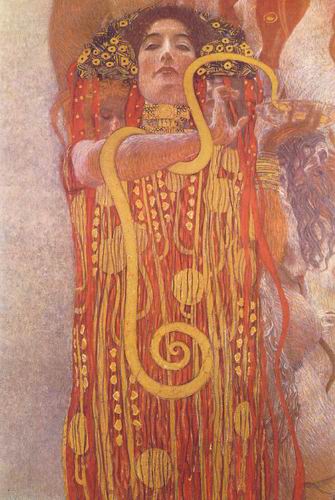
Half-Klimt (one, two, three), half-Rothko (one, two, three) – I know they’ve been everywhere, but they’re so bloody beautiful: Every Playboy Centrefold: The Decades. There’s something so elusive and gestural about them – and the traces of writing and iconography lingering around the bodies just makes the whole thing seem even less to do with flesh and still more numinous.
The same artist achieved similar effects with a triptych of stills of late night chat-show presenters and used the same process on images of homes for sale, which is equally breath-taking.
Established 1999…
Omigod. I completely forgot my weblogging birthday on Saturday. This site has now been going for a full four years and two days. Four years and two days of almost daily pre-fabricated, disposable weblogging goodness. That’s one thousand four hundred and sixty three days since I started weblogging. Worse still – that’s three thousand nine hundred and forty nine posts. An average of 2.7 posts per day. Dear God. When will it end? Will I never tire of writing this crap? In twenty years, will I have an Established 1999 sign out front? Will I be in total information capturing mode as I’m shoved into an old folks home? Will there be a bloody keyboard in my grave? Will the first thing that happens in Atheist Heaven be that some crotchetty old bastard with a toothless smile hands me an ethereal laptop with spiritual-fidelity wireless soulnet access before demanding that I write something pithy about halos?
Central London’s bus routes have a new feature – small machines that you must buy your ticket from before they will let you embark. They have two particularly interesting features. Firstly they are the least well-designed / usable ticket machines I’ve ever seen, with the buttons that you are forced to press before you pay placed (cunningly) about half a foot below the place where you put the money in. So you see loads of people putting in money and then pressing buttons and looking a bit blank when they should be doing it the other way around. They form in little clots around the machines and make it impossible for everyone else who isn’t quite as dumb to pay for a ticket before the bus moves off. It’s very frustrating.
The other significant feature is equally annoying. The accursed machines are just too easy for people to game. Every single machine I use on a regular basis is clogged up with money at least twice a week. The reason? There’s a guy who roams up and down Oxford Street, putting in sticking and/or clogging-up substances (gum, maybe?) into the paying slot. He then waits for the money to build up and then comes along later in the day to harvesting the machines of lovely lovely cash. I have lost several pounds to this nefarious prankster. He is … objectionable … in my sight.
Anyway – yesterday I got to the bus stop, put in a pound, pressed the button (wrong order again, dammit, bloody machines), then pressed the eject button and then the proper button (first this time, good Tom) and capped it all off with the insertion of a nice round pound-coin. And what response did I get? Nothing. So I pressed the ‘eject money’ button once more. Nothing. So then I thumped it with my fist… And… Jackpot! Five shiny pounds clang down into the tray at the bottom. I am rich! My bus ticket karma is strong and I have been rewarded!
One stop later and the world finds equilibrium. Two people get on the bus without tickets. They want to get off again and buy tickets while the bus waits. The bus driver is understandably cross and refuses to let them do this as the ticket machine process is long and complex. They refuse to get out. Everyone on the bus shouts at them. Even I shout at them which is a surprise (I don’t shout at people much in public – only at the infestation of charity workers that colonise Central London). But they won’t get off. They say they’ve been waiting for half an hour. Everyone on the bus says they were waiting for half an hour too thank you very much. After ten minutes of stand-off, I get off the bus, buy them both tickets, thrust them in their hands, give them a piece of my mind about their behaviour (I’m becoming my mother) and sit down again on my seat. But they throw their tickets on the floor, the bus driver refuses to let them stay on board, the police arrive and then finally they get dragged off – possibly (for all I know) to Colditz or Alcatraz. At the next stop, almost exactly the same thing happens again! Again! Would you believe it! Another clump of people sans tickets, poncing around and shouting at the bus driver, causing a big stink and being unreasonable. Only this time I’m wise to their tricks. No buying people tickets for no good reason for me… Oooooh no… Not me.
And so time passes and we can finally see the great plan of the karmic network in its totality. For my extra four pounds that appeared from nowhere, I must pay two back and suffer over half an hour in delays. This is my destiny and I embrace it grudgingly. The world is a complex, intricate, designed place. And those bloody bus ticket machines are right at the heart of it…
On the BBC's relationship with Government…
So there’s an article about the BBC’s iCan project over at Wired.com: BBC Offers Power to the People. It’s an interesting, if slightly frustrating piece, for a whole range of reasons, but there’s one misconception that I think needs to be cleared up.
“In addition to finding the iCan issues a bit trivial, Kirkcaldy, a 20-year-old antiwar activist, doubts the BBC’s ability, as a government-owned entity, to objectively manage the site’s issues.”
The BBC very clearly and very much is not owned by the government. It’s an organisation originally created by a conglomerate of wireless manufacturers supported by a license fee that gave it financial independence from the Government that was given a royal charter in 1927. From that point onwards it has been answerable in principle only to the British people via the Board of Governors who are appointed to act as trustees for the public interest – ensuring it’s accountable and independent.
That’s not to deny that the BBC has a relationship with government – because members of the Board of Governers are appointed by the Queen under recommendation from the Prime Minister of the day. And the Government has a certain amount of power over the BBC – they approve the level of the license fee for a start (but are in no way responsible for its collection) – but there’s a very specific piece of legislation that guarantees editorial independence that should be evident to anyone who has seen the recent spat between the Labour government and the BBC.
If you’re sufficiently interested, there’s a great deal of information about the history of the BBC online as well as about how and why it operates.